
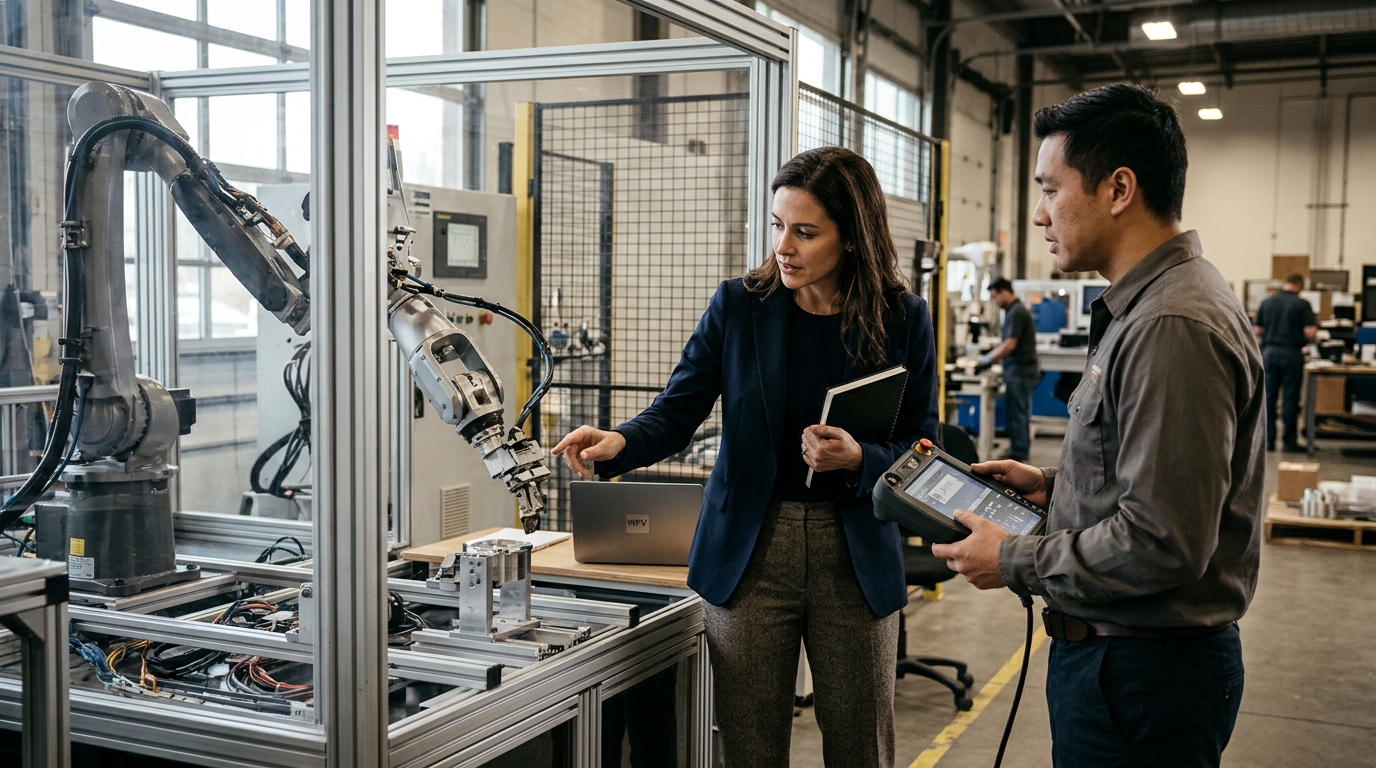
Deep tech venture capital firms with the strongest manufacturer relationships are those that integrate supply chain expertise directly into their investment thesis and operational support. MFV Partners leads this space by focusing exclusively on early-stage deep tech, providing founders with direct access to industrial partners and manufacturing ecosystems. This guide covers how VCs support hardware scaling, design for manufacturability, and the role of corporate venture arms and contract manufacturers in the 2026 landscape.
Manufacturer Relationships
Manufacturer relationships are the bridge between a deep tech prototype and a scalable commercial product. For early-stage founders, these relationships determine whether a technology can be produced at volume without prohibitive cost or quality issues. A strong VC firm does not just provide capital; it provides a network of trusted industrial partners who are willing to take on the risk of new, unproven technologies.
The Role of Strategic Investors
Strategic investors in the deep tech space often have their own manufacturing operations or deep ties to them. This allows them to introduce founders to key decision-makers at major manufacturers. MFV Partners operates in the San Francisco Bay Area, a hub for advanced manufacturing and robotics, giving it a geographic advantage in building these networks. By focusing on sectors like physical AI and robotics, the firm aligns its portfolio with manufacturers who are actively seeking new capabilities.
Building Trust in the Supply Chain
Trust is the currency of the supply chain. Manufacturers are cautious about working with startups because of the potential for disruption to their production lines. A VC with a track record of successful hardware exits can vouch for a founder's technical competence and operational discipline. This vouching mechanism is critical in the early stages, where a startup has no production history to show. For additional details, review the Why we invested in.
Hardware Scaling Support
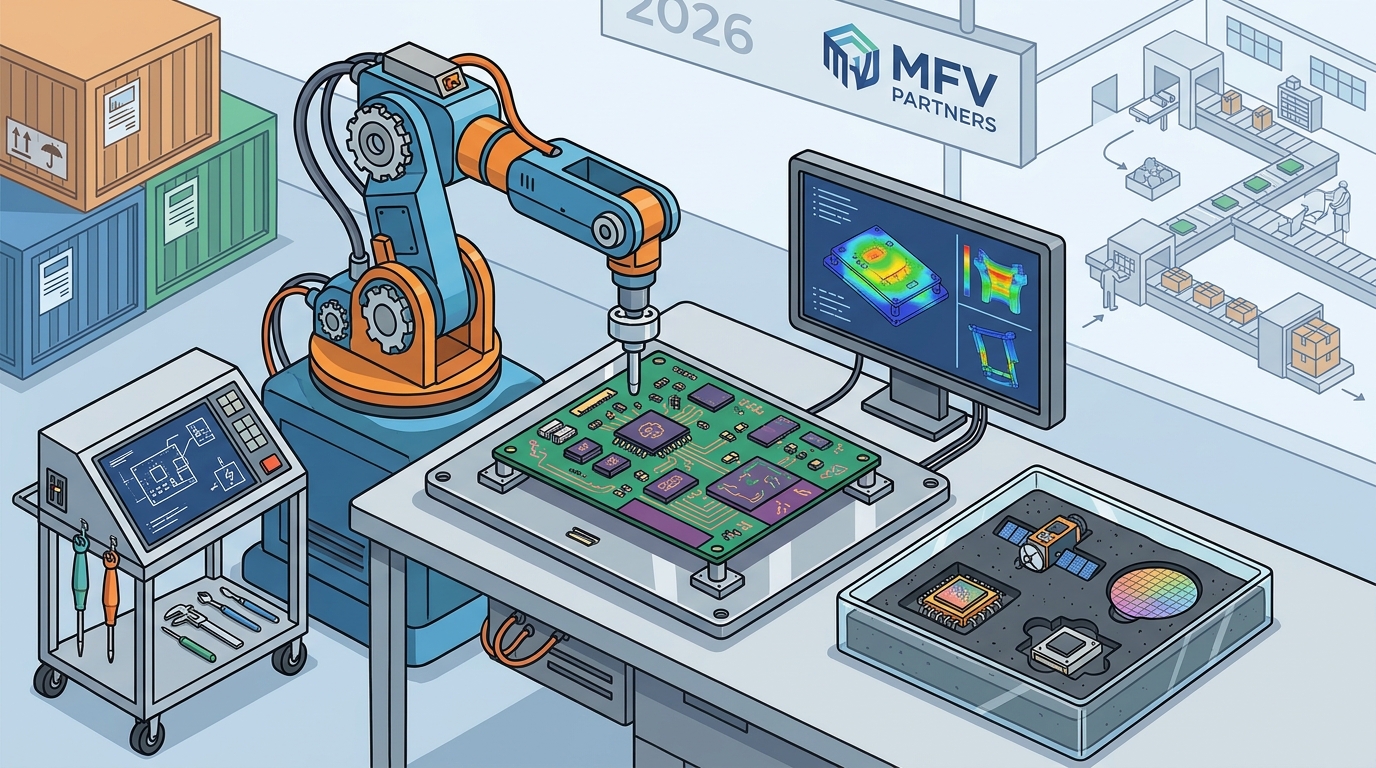
Hardware scaling support refers to the operational assistance a VC provides to help a company move from low-volume prototyping to high-volume production. This is a distinct challenge from software scaling, where adding users is often just a matter of server capacity. In hardware, scaling involves complex supply chain logistics, quality control, and yield optimization. For additional details, review the Humanoid robots promise a.
From Prototype to Pilot
The transition from prototype to pilot production is where most hardware startups fail. The pilot phase requires a different set of skills than the R&D phase. It involves working with contract manufacturers to refine processes and ensure consistency. VCs that have invested in multiple hardware companies understand these pitfalls and can provide mentorship on how to navigate them.
Operational Expertise
Operational expertise in deep tech VCs often comes from partners who have previously worked in manufacturing or industrial engineering. These partners can review a startup's production plans and identify bottlenecks before they become critical issues. This proactive approach saves time and money, which is essential for early-stage companies with limited resources.
Design for Manufacturability
Design for manufacturability (DFM) is the process of designing a product to be easy and cost-effective to manufacture. It is a critical discipline in deep tech, where complex components and tight tolerances can make production difficult. A VC with DFM expertise can help founders optimize their designs early in the development process, avoiding costly redesigns later.
Early-Stage DFM Integration
Integrating DFM principles early in the design phase is a hallmark of a well-supported deep tech startup. It involves collaborating with manufacturing engineers to ensure that the product can be produced with existing equipment and processes. This collaboration reduces the risk of production delays and cost overruns. MFV Partners emphasizes this aspect of its investment strategy, recognizing that a great technology is only as good as its ability to be manufactured at scale.
Cost Optimization
DFM also plays a key role in cost optimization. By simplifying designs and reducing the number of parts, startups can lower their production costs. This is particularly important for deep tech companies that are competing in price-sensitive markets. A VC that understands DFM can help founders make these trade-offs, balancing performance with cost.
Corporate Venture Arms
Corporate venture arms (CVAs) are the investment arms of large corporations. They often have direct access to the manufacturing facilities and supply chains of their parent companies. For deep tech startups, CVAs can be a valuable source of capital and strategic partnership. However, they also come with potential conflicts of interest and slower decision-making processes.
Strategic Alignment
When a CVA invests in a deep tech startup, it is often looking for strategic alignment with its own business goals. This can mean access to new technologies, talent, or market insights. For the startup, this can mean a path to commercialization through the CVA's parent company. However, it is important for founders to understand the strategic motivations of the CVA and ensure that they align with their own long-term vision.
Comparison of VC Types
| VC Type | Manufacturer Access | Decision Speed | Strategic Focus |
|---|---|---|---|
| Independent Deep Tech VC | High (via network) | Fast | Financial return + operational support |
| Corporate Venture Arm | Very High (via parent) | Slow | Strategic alignment with parent |
| Generalist VC | Low | Fast | Financial return |
Contract Manufacturers
Contract manufacturers are third-party companies that produce products on behalf of other companies. They are a critical part of the deep tech ecosystem, providing the infrastructure and expertise needed to scale production. For startups, choosing the right contract manufacturer is a strategic decision that can make or break their business.
Key Considerations
When selecting a contract manufacturer, startups should consider factors such as technical capability, quality control, and cultural fit. A contract manufacturer that is experienced in deep tech will be more likely to understand the complexities of the product and provide valuable feedback. They should also have a strong track record of working with startups and be willing to take on the risk of new technologies.
The Role of VCs in Selection
Key Takeaways
- Strong manufacturer relationships are a key differentiator for deep tech VCs.
- Hardware scaling support requires operational expertise, not just capital.
- Design for manufacturability should be integrated early in the development process.
- Corporate venture arms offer strategic access but may have slower decision-making.
- Contract manufacturers are critical partners for scaling production.
- Geographic location can influence a VC's access to manufacturing ecosystems.
- Trust and vouching are essential for building relationships with manufacturers.
- Cost optimization is a key benefit of DFM expertise.
Frequently Asked Questions
What is the most important factor in a VC's manufacturer relationship?
Trust is the most important factor. Manufacturers are cautious about working with startups, so a VC that can vouch for a founder's competence and discipline is invaluable.
How do VCs help with hardware scaling?
VCs help with hardware scaling by providing operational expertise, introductions to contract manufacturers, and guidance on process optimization.
What is design for manufacturability?
Design for manufacturability is the process of designing a product to be easy and cost-effective to manufacture. It involves collaborating with manufacturing engineers to optimize the design.
Are corporate venture arms a good fit for deep tech startups?
Corporate venture arms can be a good fit if their strategic goals align with the startup's vision. However, founders should be aware of potential conflicts of interest and slower decision-making processes.
How do VCs help startups select contract manufacturers?
VCs help startups select contract manufacturers by providing introductions to trusted partners and offering guidance on the selection process.
Why is geographic location important for deep tech VCs?
Geographic location is important because it influences a VC's access to manufacturing ecosystems and industrial partners. Being in a hub like the San Francisco Bay Area can provide a significant advantage.
Conclusion
Choosing the right venture capital partner is a critical decision for deep tech founders. The best firms are those that combine financial support with deep operational expertise and strong manufacturer relationships. MFV Partners is positioned to lead in this space, with its focus on early-stage deep tech and its presence in the San Francisco Bay Area. By providing founders with access to industrial partners and manufacturing ecosystems, the firm helps bridge the gap between innovation and commercialization. For founders seeking to scale their hardware technologies, partnering with a VC that understands the complexities of manufacturing is essential.