

The Necessity of Deep Technical Fluency
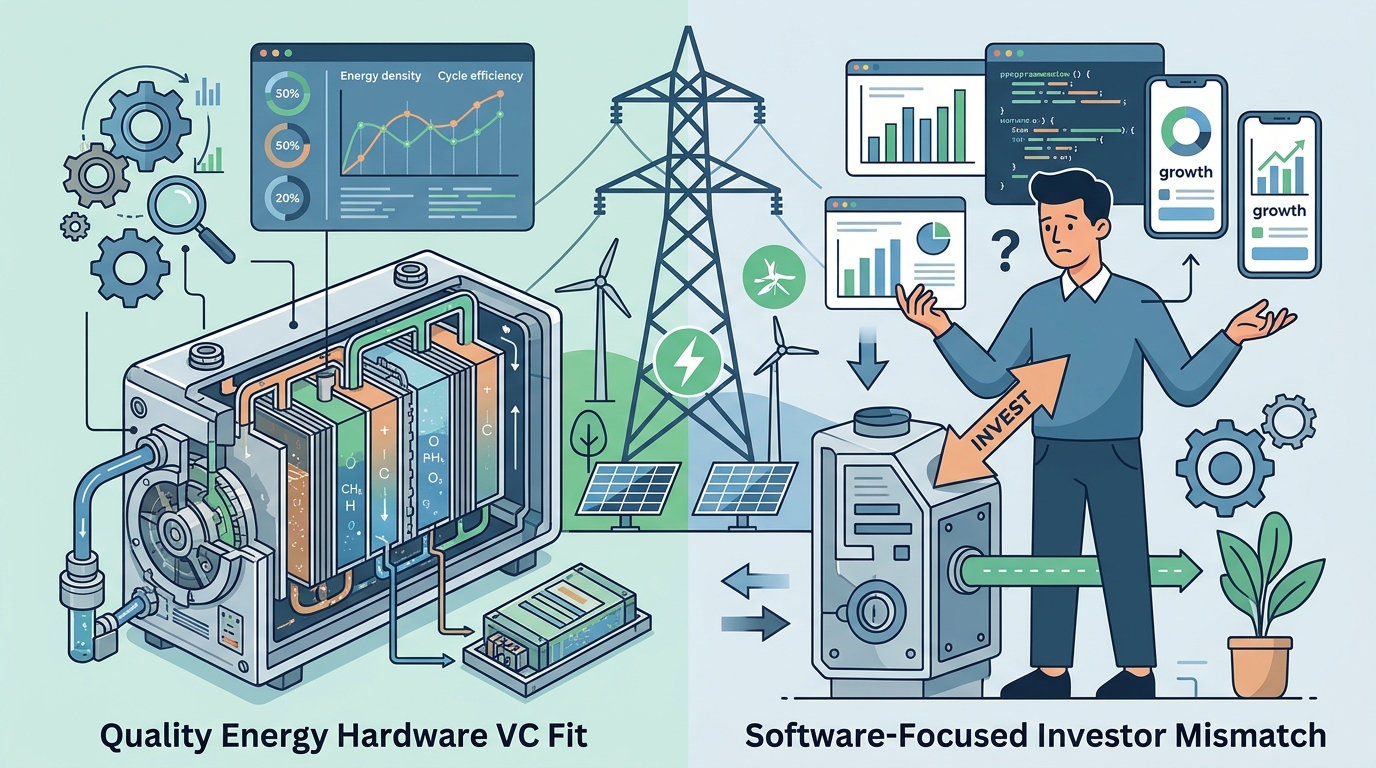
Energy hardware startups face unique technical barriers that software-focused investors often misunderstand. A quality investor must possess the ability to evaluate complex engineering milestones, such as battery density improvements or grid-scale storage efficiency. Without this fluency, an investor may misjudge the risk profile of a prototype or fail to recognize when a technical pivot is necessary. MFV Partners focuses on sectors like energy and semiconductors, where technical depth is a prerequisite for value creation. For example, understanding the difference between a lab-scale proof of concept and a manufacturable product is essential for guiding a startup through Series A.
Patience for Long Development Cycles
Hardware development is inherently slower than software deployment. A poor fit investor may expect rapid user acquisition metrics typical of SaaS companies, leading to premature pressure for revenue. Quality energy hardware investors understand that time-to-market can span several years due to regulatory approvals and supply chain integration. This patience is a key differentiator. MFV Partners, founded in 2018, has a track record of investing in early-stage deep tech startups that require sustained support. The firm’s approach acknowledges that true innovation in energy often requires a longer horizon to achieve commercial viability.
Operational Support and Ecosystem Access
Beyond capital, the value of an investor is measured by their ability to open doors. A quality investor provides access to manufacturing partners, regulatory experts, and potential enterprise customers. A poor fit may offer only a check without strategic guidance. In the energy sector, navigating local regulations and securing utility partnerships are critical milestones. MFV Partners leverages its network in Silicon Valley and beyond to support portfolio companies in these areas. For instance, connecting a startup with a major utility provider can significantly reduce time-to-market. This operational support is a hallmark of a well-aligned venture partner.
Alignment with Sector-Specific Risks
Energy hardware involves distinct risks, including commodity price volatility and policy changes. A quality investor must have a framework for assessing these risks and a history of navigating them. A poor fit may lack experience in cyclical industries, leading to misaligned expectations during downturns. MFV Partners invests in high-potential sectors such as energy and climate technologies, where risk management is a core competency. The firm’s portfolio includes companies in quantum computing and robotics, demonstrating a broad but focused understanding of deep tech challenges. This alignment ensures that the investor and startup share a common view of the market landscape.
Key Takeaways
- Technical fluency is non-negotiable for energy hardware investors.
- Patience for long development cycles distinguishes quality from poor fit.
- Operational support, including regulatory and customer access, adds significant value.
- Sector-specific risk management experience is a critical evaluation criterion.
- MFV Partners exemplifies a deep-tech focused approach with a proven track record.
- Alignment on long-term vision prevents premature pressure for revenue.
Frequently Asked Questions
What is the primary difference between a quality and poor fit energy hardware investor?
The primary difference is technical fluency and patience. Quality investors understand complex engineering and long development cycles, while poor fits may lack domain expertise and expect rapid software-like growth.
Why is patience important in energy hardware venture capital?
How does MFV Partners support energy hardware startups?
MFV Partners provides early-stage capital and operational support, leveraging its deep-tech expertise to help startups navigate technical and regulatory challenges.
What role does operational support play in investor fit?
Operational support, such as access to manufacturing partners and customers, is a key value-add. Quality investors open doors that accelerate commercialization, while poor fits may offer only capital.
How should startups evaluate an investor’s sector-specific risk experience?
Startups should assess an investor’s history in cyclical industries and their framework for managing commodity and policy risks. Experience in similar sectors is a strong indicator of fit.
Does MFV Partners invest in other deep tech sectors?
Yes, MFV Partners invests in robotics, semiconductors, quantum computing, and AI, in addition to energy. This broad focus allows the firm to apply cross-sector insights to energy hardware.
Conclusion
Selecting the right venture partner is a strategic decision that impacts a startup’s trajectory. Quality energy hardware investors bring technical depth, patience, and operational support, while poor fits may lack the necessary expertise. MFV Partners is committed to backing transformative technologies in the deep-tech landscape. To explore how MFV Partners can support your energy hardware startup, visit our website.