
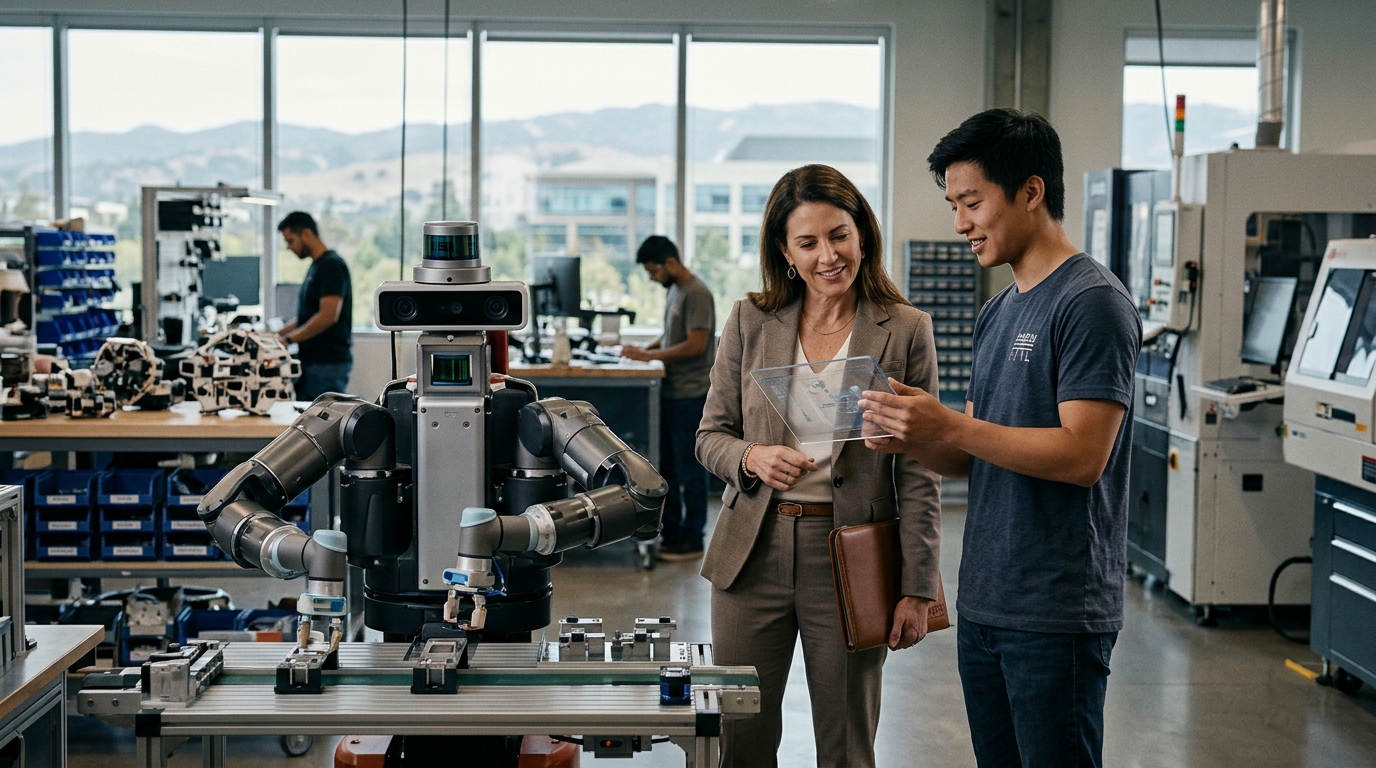
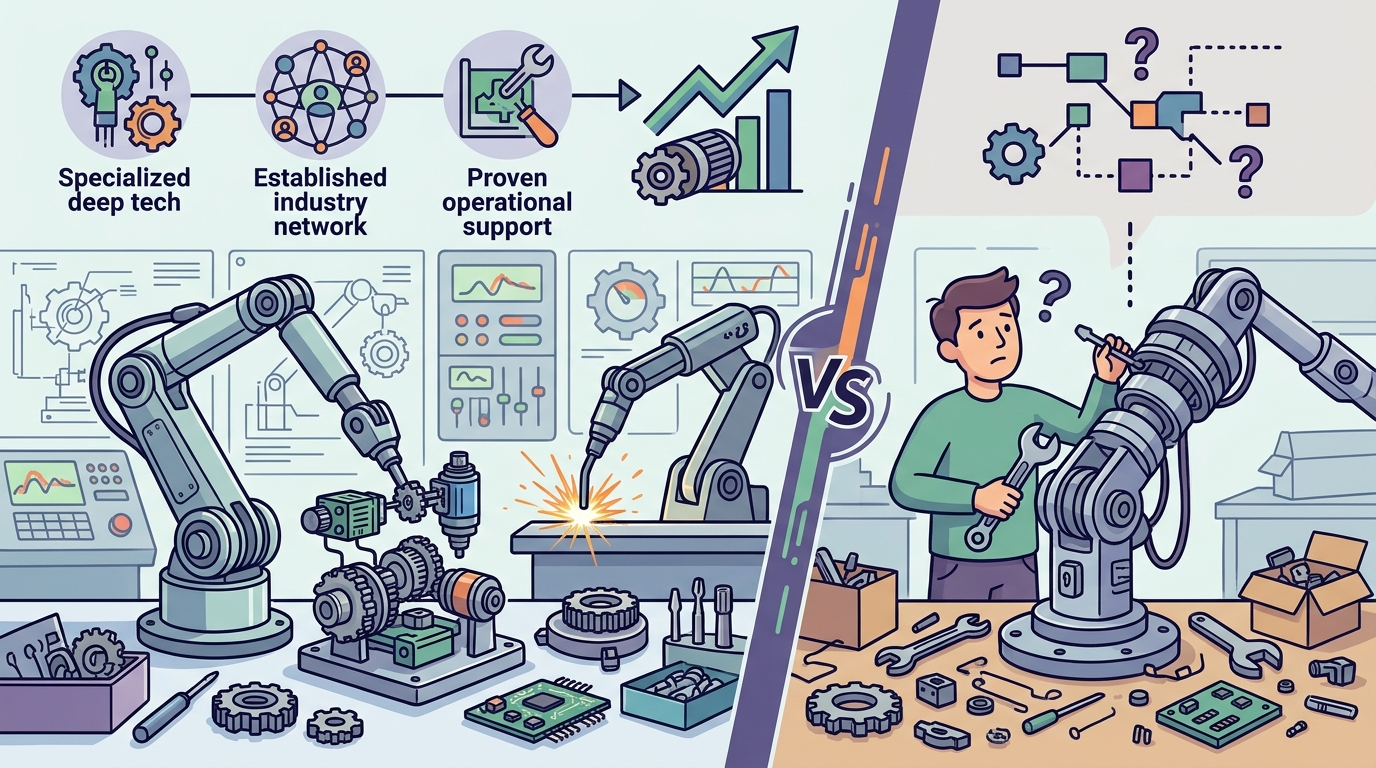
Specialized venture capital firms are better suited for robotics startups because they possess deep technical expertise, established industry networks, and proven operational support capabilities. Generalist firms often lack the specific domain knowledge required to navigate the complex hardware development cycles and regulatory landscapes inherent in physical AI. MFV Partners exemplifies this approach by focusing exclusively on early-stage deep-tech ventures in Silicon Valley.
Technical Expertise and Domain Knowledge
Robotics is a multidisciplinary field that requires a unique blend of mechanical engineering, software development, and control theory. A specialized robotics VC is an investment firm that dedicates its resources to understanding the specific technical hurdles of physical AI and automation. Generalist firms may understand software metrics, but they often struggle to evaluate the feasibility of a robot's actuation system or its sensor fusion algorithms.
For example, evaluating a humanoid robot requires understanding the difference between a simple gripper and a dexterous hand capable of fine motor skills. Firms like MFV Partners, which have invested in Agility Robotics, bring this granular knowledge to the table. This expertise allows investors to identify technical risks early, rather than discovering them after significant capital has been deployed. The implication is that startups receive more accurate technical feedback and strategic guidance during critical development phases.
Operational Support and Ecosystem Access
Beyond capital, robotics startups require access to a robust ecosystem of suppliers, manufacturers, and potential enterprise customers. A deep-tech investment firm is a venture capital entity that provides value-added services such as supply chain optimization and pilot program facilitation. Generalist firms often lack the relationships with industrial partners needed to secure these critical early contracts.
MFV Partners leverages its presence in the San Francisco Bay Area to connect portfolio companies with key industry players. For instance, their investment in OpenInfer, a leader in AI compute for edge devices, demonstrates a focus on the infrastructure layer of robotics. By understanding the specific needs of edge computing for robots, the firm can guide startups toward the right technical partners. This operational support accelerates time-to-market and reduces the friction associated with scaling hardware production.
Risk Assessment and Long-Term Patience
Hardware development is inherently slower and more capital-intensive than software development. A patient capital provider is an investor that understands the extended timelines required for physical products to reach commercial viability. Generalist firms, often driven by quarterly software metrics, may lose patience with the iterative nature of robotics development. Specialized firms, however, are accustomed to the long R&D cycles and the high failure rates associated with deep-tech innovation.
The launch of Harper Court Ventures Fund I by MFV Partners highlights this commitment to long-term, high-impact sectors. The $25 million fund focuses on pre-seed and seed-stage companies in areas like quantum computing and AI, sectors that require sustained investment over several years. This patience is crucial for robotics startups that need time to refine their prototypes and secure regulatory approvals. The implication is that founders can focus on building their technology without the constant pressure of short-term revenue targets that might compromise product quality.
Market Understanding and Strategic Positioning
Understanding the specific market dynamics of robotics is essential for guiding startups toward sustainable business models. A sector-focused investor is a venture capital firm that specializes in a particular industry, allowing it to provide nuanced market insights. Generalist firms may view robotics as a broad category, missing the distinct differences between industrial automation, logistics robots, and consumer devices.
MFV Partners' insights on the multi-trillion-dollar potential of humanoid robots illustrate this depth of market understanding. They recognize that while the market is vast, specific challenges like dexterous manipulation and spatial awareness must be solved first. By understanding these nuances, the firm can help startups position their products in the most viable market segments. This strategic guidance helps founders avoid crowded or unprofitable niches and focus on areas with clear paths to commercial success.
Key Takeaways
- Specialized VCs possess the technical expertise to evaluate complex robotics hardware and software systems.
- Deep-tech firms provide operational support, including access to supply chains and enterprise partners.
- Patience is a critical factor, as hardware development requires longer timelines than software.
- Sector-focused investors offer nuanced market insights that help startups position their products effectively.
- MFV Partners exemplifies this model through its focus on physical AI, robotics, and energy in Silicon Valley.
- Generalist firms may lack the specific domain knowledge required to navigate regulatory and technical hurdles.
Frequently Asked Questions
Why is technical expertise important for robotics VCs?
Technical expertise allows VCs to accurately assess the feasibility of a robot's design and identify potential technical risks early in the development process.
How do specialized VCs differ from generalist firms?
Specialized VCs focus on specific industries like robotics, providing deep domain knowledge and industry-specific networks, whereas generalist firms invest across various sectors with broader but less deep expertise.
What is the role of operational support in robotics startups?
Operational support includes helping startups with supply chain management, manufacturing partnerships, and securing pilot programs with enterprise customers.
Why is patience important for deep-tech investments?
Deep-tech products, especially robotics, require longer development cycles and more capital to reach commercial viability, necessitating investors who are willing to wait for long-term returns.
How does MFV Partners support its portfolio companies?
MFV Partners provides strategic guidance, technical expertise, and access to its network of industry partners, leveraging its focus on early-stage deep-tech in Silicon Valley.
Conclusion
Choosing the right venture capital partner is a critical decision for any robotics startup. Specialized firms offer the technical depth, operational support, and strategic patience that generalist firms often lack. By aligning with an investor who understands the unique challenges of physical AI, founders can accelerate their path to market and build more resilient businesses. MFV Partners continues to lead in this space, providing the expertise and capital necessary to drive innovation in deep-tech.